what was A primary reason why Britain was able to take over India
M any modern apologists for British colonial rule in Bharat no longer competition the basic facts of imperial exploitation and plunder, rapacity and boodle, which are too deeply documented to be challengeable. Instead they offering a counter-argument: granted, the British took what they could for 200 years, but didn't they too leave behind a great deal of lasting benefit? In particular, political unity and democracy, the rule of police force, railways, English education, even tea and cricket?
Indeed, the British similar to point out that the very idea of "Bharat" as i entity (now three, only one during the British Raj), instead of multiple warring principalities and statelets, is the incontestable contribution of British imperial rule.
Unfortunately for this argument, throughout the history of the subcontinent, there has existed an impulsion for unity. The thought of India is as sometime as the Vedas, the earliest Hindu scriptures, which describe "Bharatvarsha" equally the land between the Himalayas and the seas. If this "sacred geography" is essentially a Hindu idea, Maulana Azad has written of how Indian Muslims, whether Pathans from the north-westward or Tamils from the southward, were all seen by Arabs as "Hindis", hailing from a recognisable civilisational space. Numerous Indian rulers had sought to unite the territory, with the Mauryas (iii centuries before Christ) and the Mughals coming the closest by ruling nigh 90% of the subcontinent. Had the British not completed the chore, there is little incertitude that some Indian ruler, emulating his forerunners, would have done and so.
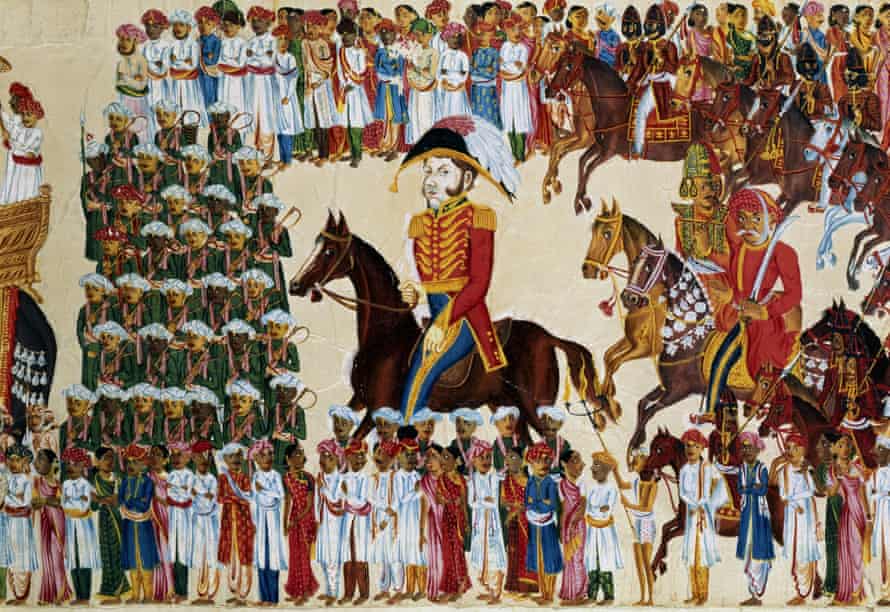
Far from crediting Britain for India's unity and enduring parliamentary democracy, the facts indicate clearly to policies that undermined information technology – the dismantling of existing political institutions, the fomenting of communal partitioning and systematic political discrimination with a view to maintaining British domination.
In the years after 1757, the British astutely fomented cleavages among the Indian princes, and steadily consolidated their dominion through a policy of divide and rule. Later, in 1857, the sight of Hindu and Muslim soldiers rebelling together, willing to pledge articulation allegiance to the enfeebled Mughal monarch, alarmed the British, who concluded that pitting the 2 groups against one some other was the most constructive mode to ensure the unchallenged continuance of empire. Every bit early as 1859, the and so British governor of Bombay, Lord Elphinstone, advised London that "Divide et impera was the old Roman maxim, and information technology should be ours".
Since the British came from a hierarchical society with an entrenched class system, they instinctively looked for a similar one in India. The effort to empathise indigenous, religious, sectarian and caste differences amidst Britain'southward subjects inevitably became an exercise in defining, dividing and perpetuating these differences. Thus colonial administrators regularly wrote reports and conducted censuses that classified Indians in ever-more bewilderingly narrow terms, based on their linguistic communication, religion, sect, caste, sub-caste, ethnicity and skin colour. Not only were ideas of customs reified, merely also entire new communities were created by people who had not consciously idea of themselves as particularly different from others around them.
Large-scale conflicts between Hindus and Muslims (religiously defined), only began under colonial rule; many other kinds of social strife were labelled equally religious due to the colonists' orientalist assumption that religion was the fundamental partition in Indian club.
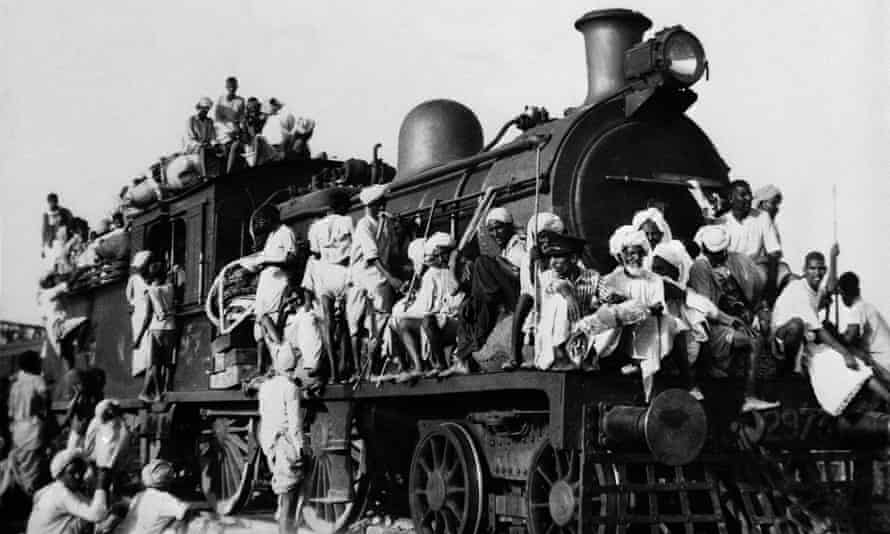
It is questionable whether a totalising Hindu or Muslim identity existed in any meaningful sense in India before the 19th century. Yet the creation and perpetuation of Hindu–Muslim animosity was the about significant accomplishment of British royal policy: the projection of dissever et impera would attain its culmination in the plummet of British say-so in 1947. Partition left behind a million dead, thirteen meg displaced, billions of rupees of property destroyed, and the flames of communal hatred blazing hotly across the ravaged state. No greater indictment of the failures of British rule in India tin can be establish than the tragic style of its ending.
Nor did Great britain work to promote democratic institutions under imperial rule, every bit it liked to pretend. Instead of edifice cocky-government from the village level up, the East Republic of india Company destroyed what existed. The British ran government, tax collection, and administered what passed for justice. Indians were excluded from all of these functions. When the crown eventually took charge of the country, it devolved smidgens of regime authority, from the meridian, to unelected provincial and fundamental "legislative" councils whose members represented a tiny educated elite, had no accountability to the masses, passed no meaningful legislation, exercised no real power and satisfied themselves they had been consulted by the government even if they took no bodily decisions.
As late as 1920, under the Montagu-Chelmsford "reforms", Indian representatives on the councils – elected by a franchise so restricted and selective that only one in 250 Indians had the right to vote – would exercise command over subjects the British did not care about, like education and health, while real power, including taxation, law and order and the authority to nullify whatsoever vote by the Indian legislators, would rest with the British governor of the provinces.
Democracy, in other words, had to be prised from the reluctant grasp of the British by Indian nationalists. Information technology is a bit rich to oppress, torture, imprison, enslave, deport and proscribe a people for 200 years, and then take credit for the fact that they are democratic at the finish of it.
A corollary of the argument that Britain gave Republic of india political unity and democracy is that it established the dominion of law in the country. This was, in many ways, central to the British self-conception of regal purpose; Kipling, that bombastic voice of Victorian imperialism, would wax eloquent on the noble duty to bring law to those without it. Merely British law had to be imposed upon an older and more circuitous culture with its own legal civilization, and the British used coercion and cruelty to get their way. And in the colonial era, the dominion of law was non exactly impartial.
Crimes committed by whites against Indians attracted minimal punishment; an Englishmen who shot dead his Indian servant got six months' jail fourth dimension and a small-scale fine (so about 100 rupees), while an Indian bedevilled of attempted rape confronting an Englishwoman was sentenced to 20 years of rigorous imprisonment. In the unabridged 2 centuries of British rule, merely three cases can be constitute of Englishmen executed for murdering Indians, while the murders of thousands more than at British easily went unpunished.
The death of an Indian at British hands was e'er an accident, and that of a Briton because of an Indian's actions e'er a capital crime. When a British primary kicked an Indian servant in the stomach – a non uncommon course of conduct in those days – the Indian's resultant decease from a ruptured spleen would be blamed on his having an enlarged spleen equally a event of malaria. Punch wrote an entire ode to The Stout British Boot as the favoured instrument of keeping the natives in society.
Political dissidence was legally repressed through various acts, including a sedition law far more rigorous than its British equivalent. The penal code contained 49 articles on crimes relating to dissent confronting the country (and but eleven on crimes involving death).
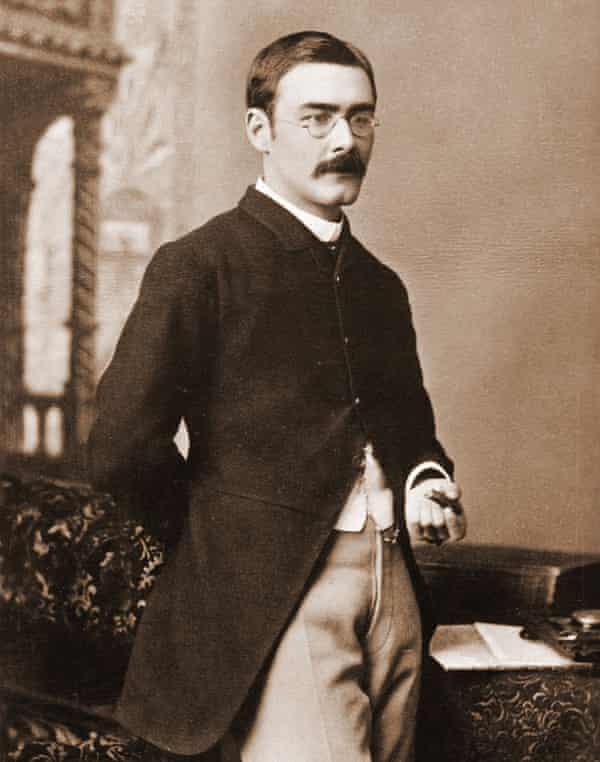
Of course the British did give India the English language, the benefits of which persist to this day. Or did they? The English language was not a deliberate gift to India, just once again an instrument of colonialism, imparted to Indians only to facilitate the tasks of the English. In his notorious 1835 Minute on Teaching, Lord Macaulay articulated the classic reason for teaching English, only only to a pocket-sized minority of Indians: "We must do our best to form a form who may be interpreters between us and the millions whom nosotros govern; a grade of persons, Indians in blood and colour, simply English in gustation, in opinions, in morals and in intellect."
The linguistic communication was taught to a few to serve equally intermediaries between the rulers and the ruled. The British had no desire to educate the Indian masses, nor were they willing to budget for such an expense. That Indians seized the English language and turned it into an instrument for our own liberation – using it to express nationalist sentiments confronting the British – was to their credit, non by British design.
The construction of the Indian Railways is ofttimes pointed to by apologists for empire as ane of the ways in which British colonialism benefited the subcontinent, ignoring the obvious fact that many countries likewise congenital railways without having to get to the problem and expense of existence colonised to do and then. But the facts are even more damning.
The railways were starting time conceived of past the East Republic of india Company, like everything else in that firm's calculations, for its own benefit. Governor General Lord Hardinge argued in 1843 that the railways would be beneficial "to the commerce, government and military machine control of the land". In their very formulation and structure, the Indian railways were a colonial scam. British shareholders made absurd amounts of money by investing in the railways, where the regime guaranteed returns double those of regime stocks, paid entirely from Indian, and non British, taxes. It was a splendid racket for Britons, at the expense of the Indian taxpayer.
The railways were intended principally to transport extracted resources – coal, iron ore, cotton wool and and so on – to ports for the British to ship home to use in their factories. The motion of people was incidental, except when it served colonial interests; and the 3rd-class compartments, with their wooden benches and total absence of amenities, into which Indians were herded, attracted horrified comment even at the time.
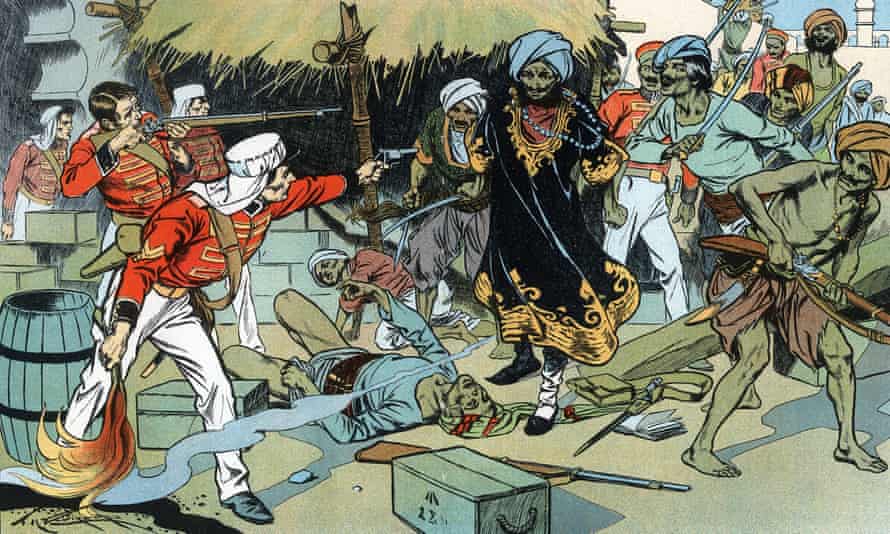
And, of class, racism reigned; though whites-only compartments were soon washed away with on grounds of economic viability, Indians establish the bachelor affordable infinite grossly inadequate for their numbers. (A marvellous postal service-independence cartoon captured the state of affairs perfectly: information technology showed an overcrowded train, with people hanging off it, clinging to the windows, squatting perilously on the roof, and spilling out of their third-class compartments, while ii Britons in sola topis sit in an empty excellent compartment maxim to each other, "My dear chap, in that location's nobody on this train!")
Nor were Indians employed in the railways. The prevailing view was that the railways would have to exist staffed almost exclusively by Europeans to "protect investments". This was especially true of signalmen, and those who operated and repaired the steam trains, simply the policy was extended to the cool level that even in the early 20th century all the cardinal employees, from directors of the Railway Board to ticket-collectors, were white men – whose salaries and benefits were also paid at European, not Indian, levels and largely repatriated back to England.
Racism combined with British economic interests to undermine efficiency. The railway workshops in Jamalpur in Bengal and Ajmer in Rajputana were established in 1862 to maintain the trains, simply their Indian mechanics became and then adept that in 1878 they started designing and building their own locomotives. Their success increasingly alarmed the British, since the Indian locomotives were just as expert, and a great deal cheaper, than the British-made ones. In 1912, therefore, the British passed an deed of parliament explicitly making it impossible for Indian workshops to pattern and industry locomotives. Between 1854 and 1947, India imported around 14,400 locomotives from England, and another 3,000 from Canada, the Us and Germany, merely fabricated none in Bharat after 1912. Later on independence, 35 years later on, the old technical knowledge was and then completely lost to India that the Indian Railways had to go cap-in-mitt to the British to guide them on setting up a locomotive factory in Republic of india over again. At that place was, however, a plumbing equipment postscript to this saga. The principal technology consultants for Uk's railways, the London-based Rendel, today rely extensively on Indian technical expertise, provided to them by Rites, a subsidiary of the Indian Railways.
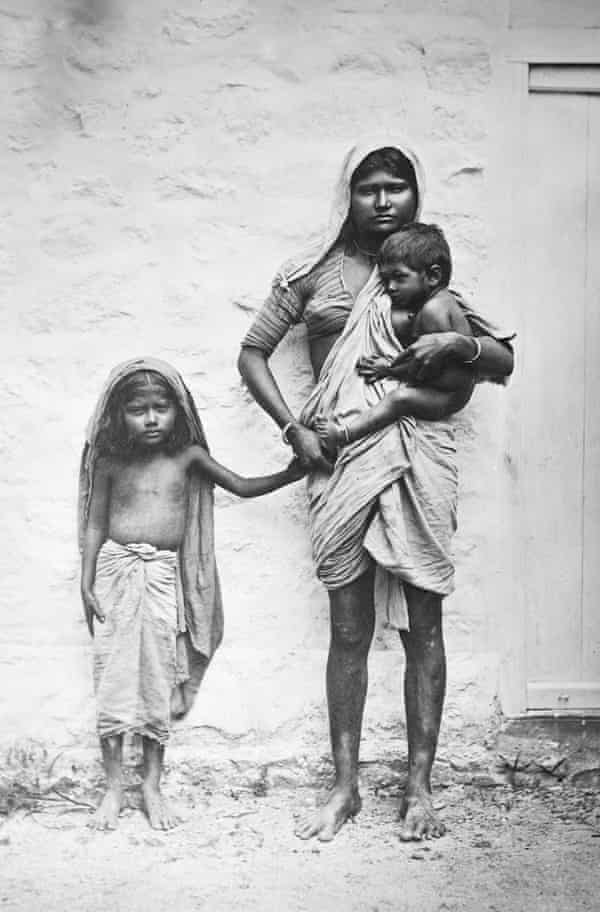
The process of colonial rule in India meant economic exploitation and ruin to millions, the destruction of thriving industries, the systematic deprival of opportunities to compete, the elimination of indigenous institutions of governance, the transformation of lifestyles and patterns of living that had flourished since time immemorial, and the obliteration of the nearly precious possessions of the colonised, their identities and their self-respect. In 1600, when the East India Visitor was established, Britain was producing just 1.8% of the world'southward GDP, while India was generating some 23% (27% by 1700). By 1940, after most two centuries of the Raj, United kingdom of great britain and northern ireland accounted for nigh 10% of world Gross domestic product, while India had been reduced to a poor "third-world" land, destitute and starving, a global poster child of poverty and famine. The British left a society with sixteen% literacy, a life expectancy of 27, practically no domestic manufacture and over ninety% living below what today we would call the poverty line.
The India the British entered was a wealthy, thriving and commercialising society: that was why the East Republic of india Visitor was interested in it in the beginning place. Far from being astern or underdeveloped, pre-colonial India exported high quality manufactured appurtenances much sought later on past U.k.'s fashionable society. The British aristocracy wore Indian linen and silks, decorated their homes with Indian chintz and decorative textiles, and craved Indian spices and seasonings. In the 17th and 18th centuries, British shopkeepers tried to pass off shoddy English-made textiles every bit Indian in order to accuse higher prices for them.
The story of India, at different phases of its several-thou-year-old civilisational history, is replete with great educational institutions, magnificent cities alee of any conurbations of their time anywhere in the world, pioneering inventions, earth-class manufacturing and manufacture, and abundant prosperity – in short, all the markers of successful modernity today – and there is no earthly reason why this could not again have been the case, if its resources had not been drained away by the British.
If there were positive byproducts for Indians from the institutions the British established and ran in Bharat in their own interests, they were never intended to benefit Indians. Today Indians cannot live without the railways; the Indian authorities have reversed British policies and they are used principally to transport people, with freight bearing ever higher charges in order to subsidise the passengers (exactly the reverse of British practise).
This is why Britain'south historical amnesia about the rapacity of its rule in India is and so deplorable. Recent years have seen the rise of what the scholar Paul Gilroy called "postcolonial melancholia", the yearning for the glories of Empire, with a 2014 YouGov poll finding 59% of respondents thought the British empire was "something to be proud of", and only nineteen% were "aback" of its misdeeds.
All this is not intended to take whatsoever bearing on today's Indo-British relationship. That is now between two sovereign and equal nations, non between an imperial overlord and oppressed subjects; indeed, British prime minister Theresa May recently visited Republic of india to seek investment in her mail-Brexit economy. Equally I've ofttimes argued, yous don't demand to seek revenge upon history. History is its own revenge.
andersonevestan43.blogspot.com
Source: https://www.theguardian.com/world/2017/mar/08/india-britain-empire-railways-myths-gifts
0 Response to "what was A primary reason why Britain was able to take over India"
Postar um comentário